

Land & Lot Search · Redmond, WA
Redmond lots & land.
Finding buildable land in Redmond takes more than a map search — you need to know which parcels are truly shovel-ready, which carry environmental restrictions, and which neighborhoods have the utilities already stubbed in.
Market context
What buyers and sellers should know.
Redmond land inventory shifts faster than most buyers expect. Rezoning, development pressure, and infrastructure expansion all affect which parcels are worth pursuing. RexMont's agents track active listings and off-market opportunities across Redmond.
Redmond homes are currently priced around $1.1M median (roughly $580/sqft), with an average of 41 days on market. The area is served by the Lake Washington School District, and top local employers include Microsoft HQ, Nintendo of America, and T-Mobile. Primary commute corridors connect to SR-520 / SR-202 and East Link Light Rail — Redmond Technology Station.
RexMont Real Estate is Seattle and the Eastside's most-reviewed brokerage — 1,244+ five-star Google reviews and over $1 billion in closed transactions across 1,200+ deals.
Before you buy
What to know about lots & land in Redmond.
Verify zoning and permitted uses before anything else
Redmond parcels carry different zoning designations — residential, agricultural, commercial, mixed-use. Confirm permitted uses, minimum lot sizes, and setback requirements with the county or city planning department before making any offer.
Utilities and infrastructure access
Not all vacant land has water, sewer, power, or road access. Connecting to municipal utilities can add $30,000–$150,000+ to your costs. Well and septic are alternatives, but require permitting and soil testing.
Environmental restrictions and critical areas
Wetlands, steep slopes, flood zones, and critical area buffers can severely limit what you can build — even on parcels marketed as buildable. A Phase I environmental assessment and county GIS overlay review should precede any serious offer.
Perc tests and soil conditions
If you plan to install a septic system, a percolation (perc) test is required. Failing soils can make an otherwise attractive parcel unusable for residential construction.
Financing is different for raw land
Traditional mortgage lenders don't finance raw land. Expect to use a land loan, portfolio lender, or seller financing — typically with higher down payments (25–50%) and shorter terms than residential mortgages.
HOA and road maintenance agreements
Some Redmond land parcels are part of larger subdivisions with shared road or utility maintenance agreements. Review any CC&Rs or easements before closing.
Tools & insights
Resources for Redmond buyers and sellers.
Live NWMLS data
Active Redmond lots & land for sale
The latest active NWMLS lots & land in Redmond, refreshed hourly.
- Median price
- $1.1M
- Median $/sqft
- $580
- Avg days on market
- 41
- Listings for sale
- 14+
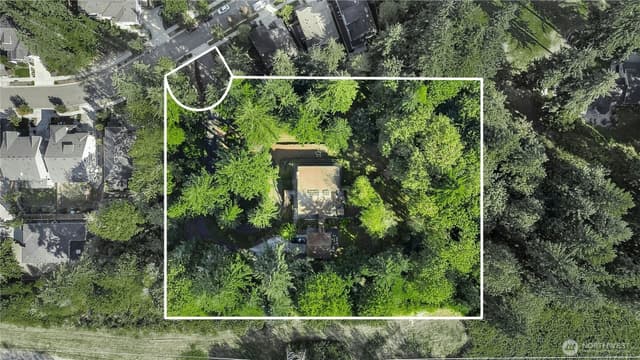 Active5 days active · 5 cumulative
$2,875,000
MLS# 258084617311 NE 112th Street
Redmond, WA 98052
0 bd0 baListing courtesy of Windermere R.E. Northeast, Inc
 Active29 days active · 29 cumulative
$1,250,000
MLS# 25841090 TBD NE Union Hill Road
Redmond, WA 98053
0 bd0 baListing courtesy of FIRST AND MAIN
 Active20 days active · 20 cumulative
$556,000
MLS# 25835512 XXXX NE 50th Street
Redmond, WA 98053
0 bd0 baListing courtesy of Keller Williams Rlty Bellevue
 Active31 days active · 31 cumulative
$3,500,000
MLS# 256353511712 176th Ave NE
Redmond, WA 98052
0 bd0 baListing courtesy of WeLakeside
 Active72 days active · 72 cumulative
$175,000
MLS# 253994227703 NE 35th Street NE
Redmond, WA 98053
0 bd0 baListing courtesy of Infinity Properties
 Active29 days active · 29 cumulative
$435,000
MLS# 25522423440 E Ames Lake Drive NE
Redmond, WA 98053
0 bd0 baListing courtesy of Windermere Real Estate/East
 Active64 days active · 64 cumulative
$2,380,000
MLS# 25446468412 164 Avenue NE
Redmond, WA 98052
0 bd0 baListing courtesy of Windermere Bellevue Commons
 Active69 days active · 69 cumulative
$795,000
MLS# 25310720 XXXX 198th Avenue NE
Redmond, WA 98053
0 bd0 baListing courtesy of Windermere Real Estate/East
 Active221 days active · 221 cumulative
$1,575,000
MLS# 252921267 XX 258th Avenue NE
Redmond, WA 98053
0 bd0 baListing courtesy of Best Choice Realty LLC
 Active114 days active · 114 cumulative
$16,000,000
MLS# 25289659859 Redmond-Woodinville Road NE
Redmond, WA 98052
0 bd0 baListing courtesy of COMPASS
 Active682 days active · 682 cumulative
$749,000
MLS# 25274587316 238th Avenue NE
Redmond, WA 98052
0 bd0 baListing courtesy of Coldwell Banker Bain
 Active120 days active · 120 cumulative
$299,900
MLS# 25028910 NE 58th Street NE
Redmond, WA 98053
0 bd0 baListing courtesy of Skyline Properties, Inc.
 Active150 days active · 150 cumulative
$380,000
MLS# 247134157 XX 188th Avenue NE
Redmond, WA 98053
0 bd0 baListing courtesy of MY REALTY GROUP LLC
 Active576 days active · 576 cumulative
$150,000
MLS# 2260649120 XX 196th Avenue NE
Redmond, WA 98053
0 bd0 baListing courtesy of KW Mountains to Sound Realty
Listing data courtesy of NWMLS. Provided for the consumer's personal, non-commercial use. Market stats reflect representative market data for Redmond; current listings and individual neighborhoods may vary.
See all lots & land →Based on information submitted to the MLS GRID as of October 20, 2026 at 10:08 AM PT (date and time MLS GRID Data was obtained). All data is obtained from various sources and may not have been verified by broker or MLS GRID. Supplied Open House Information is subject to change without notice. All information should be independently reviewed and verified for accuracy. Properties may or may not be listed by the office/agent presenting the information.
Listing information courtesy of Northwest Multiple Listing Service (NWMLS). The listing data relating to real estate for sale on this web site comes in part from the Northwest Multiple Listing Service. Real estate listings held by brokerage firms other than RexMont Real Estate are marked with the “Listing courtesy of NWMLS” designation. Information provided is for the consumer’s personal, non-commercial use and may not be used for any purpose other than to identify prospective properties consumers may be interested in purchasing.
Some IDX listings have been excluded from this website.
© 2026 Northwest Multiple Listing Service. All rights reserved. Listing information deemed reliable but not guaranteed.
Copyright concernsReady to find lots & land in Redmond?
1,244+ five-star Google reviews. Seattle and the Eastside's most-reviewed brokerage.
Common questions
Redmond lots & land FAQ.
- How do I find vacant land for sale in Redmond?
- RexMont tracks active and off-market land listings across Redmond. Your agent can filter by acreage, zoning, utilities, and price range — and flag parcels before they appear on public search portals.
- Can I finance vacant land with a conventional mortgage?
- Generally no. Raw land requires a specialized land loan or portfolio lender. Down payments are typically 25–50% and terms are shorter. Construction-to-permanent loans are an option if you plan to build immediately.
- What should I look for when buying land in Redmond?
- Zoning designation, utility availability, environmental restrictions (wetlands, critical areas), road access, and soil conditions for septic are the five most important factors. Your agent should pull a county GIS overlay before any showing.
- How long does it take to get permits to build on vacant land?
- Permit timelines vary significantly by jurisdiction. Simple single-family residential permits may take 3–6 months. More complex projects or those requiring environmental review can take 12–24 months.