
Seattle seller guidance · Adriano Tori
Sell My House Seattle: a neighborhood-level plan
Sell my house Seattle: RexMont prices from your neighborhood's comparable sales, prepares the home, launches it on NWMLS and negotiates the net, with every selling cost shown before you list. Seattle's median list price is $773K and homes take about 40 days to sell (Oct 2026 figures).
I’m Adriano Tori. Your Seattle sale starts with your home, your neighborhood and your next move. Let’s compare pricing, preparation and estimated proceeds before choosing a launch plan.
Your request goes to Adriano and the RexMont team, who coordinate availability and next steps. No obligation to list.

Founder & Designated Broker
RexMont Real Estate
Washington license #27660
Supported by RexMont · Brokerage record across all markets
1,242 Google reviews1,200+ closed transactions$1B+ in closed volume
Page updated . Market figures below carry their own reporting date.
Selling in Seattle — the numbers
Updated
What a Seattle sale costs in Washington
The median asking price in Seattle is $773K (Stats updated October 2026) and Washington excise tax on a sale at that price is $12,850. Asking prices of homes currently listed, not closed sales.
Sell fast or list
What a quick cash sale and a listed sale each net at the Seattle median asking price
Same home, same October 2026 median asking price of $775,000, same mortgage payoff. The cash columns run the instant-offer range RexMont models, 5% and 15% below that asking price, as-is, with no commission and no prep; Washington REET, title and the payoff are still due.
- List on the open market
- $775,000 sale price
- $436,000
- Estimated net · baseline
- Cash offer 5% below asking
- $735,000 offer
- $450,462
- Estimated net · +$14,462 vs listing
- Cash offer 15% below asking
- $660,000 offer
- $376,797
- Estimated net · −$59,203 vs listing
The $73,665 between the two cash columns is what a written offer settles; a program fee or a repair credit deducted after inspection moves it further. Bring any offer you already hold: the review costs nothing and you keep every option, including taking the cash.
Compare a written cash offer against a broker-tested listing priceA modelling range RexMont uses until a written offer exists, not a quote from any buyer; program fees are not modelled. For context, Research summaries have placed the total cost of instant-offer programs to sellers at roughly 13–15% of the home’s value.
Washington REET tiers for a Seattle sale
| Portion of sale price | State REET |
|---|---|
| Up to $525,000 | 1.10% |
| $525,001 to $1,525,000 | 1.28% |
| $1,525,001 to $3,025,000 | 2.75% |
| Above $3,025,000 | 3.00% |
| King County local REET — on the full price | 0.50% |
Each rate applies only to the slice of the price inside its tier; the seller pays at closing. Breakpoints move to $551,000, $1,551,000 and $3,051,000 for closings on or after January 1, 2027; rates unchanged.
State schedule (2023–2026 schedule) per the Washington Department of Revenue, verified October 2026. Local rate per DOR’s local REET rate table, rates effective May 2026.
Worked example at the Seattle median
- Sale price (city median, rounded)
- $775,000
- Commission (5% total)
- −$38,750
- Washington REET (state + local)$8,975 state (2023–2026 schedule) + $3,875 local
- −$12,850
- Title and escrow
- −$2,400
- Pre-listing prep
- −$15,000
- Mortgage payoff (example: 35% of price)
- −$270,000
- Estimated net proceeds
- $436,000
Selling costs of $69,000 (8.9% of price), computed with the same function as the calculator below, on the 2023–2026 schedule. An estimate for planning, not a quote; your payoff, prep and title fees replace the example values.
Run your own Seattle numbers belowFigures reviewed by Adriano Tori, Designated Broker and Owner, RexMont Real Estate · WA Lic. #27660 · market figures updated , REET schedule per the Washington Department of Revenue.
Recent sales
Recent Seattle closings involving RexMont
Closed Seattle properties from NWMLS where RexMont represented a party. These include buyer-side and seller-side transactions; each card shows its closing information.
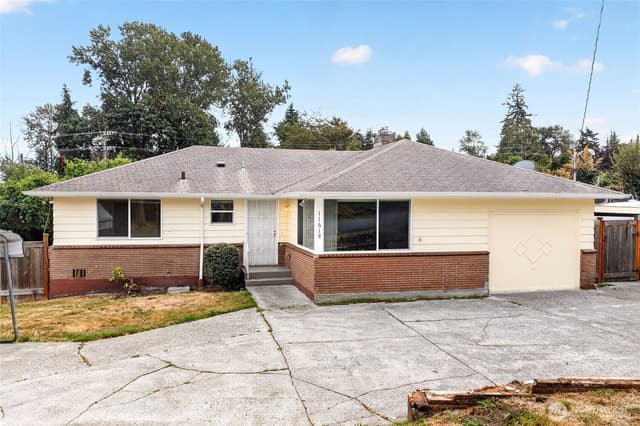
Welcome home to this comfortable 3-bedroom, 1-bath home in the convenient Boulevard Park area.
With 1,350 sq ft of living space, the home offers a functional floor plan with plenty of room to settle in and make it your own. The living room features a cozy fireplace, creating a welcoming space to relax or gather with friends. The kitchen offers good workspace and storage, while the three bedrooms provide flexibility for guests or a home office. The converted garage adds additional flex space that can easily adapt to your needs, whether you envision a home office, workout area, hobby room, media space, guest area or simply need extra storage.The covered patio provides a comfortable spot for outdoor dining, entertaining or simply enjoying the yard throughout the year. There is plenty of room for gardening, play or relaxing, along with a shed for tools, lawn equipment and seasonal storage.Conveniently located near shopping, restaurants, parks, schools and everyday amenities. Easy access to SR-509 and I-5 makes commuting to Seattle and surrounding communities convenient, with Sea-Tac Airport and Burien also close by. Nearby transit options provide additional flexibility for getting around the area.
11618 Roseberg Avenue, Seattle
Sold Oct 9, 2026 · 16 days active

The Anderson is part of the brand-new 12th Ave Cottages, a boutique community by
Developer Cartwright Built in the heart of the Highland Park neighborhood of West Seattle. Just two blocks to Highland Park Elementary School, the neighborhood playground, and the beloved Highland Park Corner Store, this home offers both convenience and charm. Targeting Built Green 4-Star certification, this fully detached two-story cottage offers a custom floorplan with two bedrooms, each featuring its own ensuite bath, and vaulted ceilings that create a bright, open feel. Enjoy your own dedicated EV-ready parking and a serene, fully fenced private patio and yard space with ideal southern exposure. Modern design, private outdoor living, and a layout that truly lives like a standalone home—The Anderson is one you don’t want to miss!
8126 12th Avenue, Seattle
Sold Jul 1, 2026 · 22 days active

100% move-in ready! experience it in person as it wont last.
Tucked into the sought-after Alicia Park neighborhood, this private mid-century retreat sits on a beautifully landscaped lot w/captivating mountain + territorial views. From the moment you arrive, a stunning stained-glass entry sets the tone, welcoming you into a home filled w/warmth, light & timeless design. Inside, sun-drenched interiors & skylights bathe the living spaces in natural light, highlighting rich hardwood floors & a striking wraparound gas fireplace that anchors the main living area. Fresh finishes & a central A/C brings comfort to the home’s classic character. At the heart of the home, a high-end remodeled kitchen showcases elegant Taj Mahal quartzite counters w/a seamless backsplash, customized cabinetry, a quartz sink & integrated cabinet & toe-kick lighting, complemented by premium Bosch appliances. The dining area opens effortlessly to a deck & patio, creating seamless indoor-outdoor living. The lower level offers a cozy family rm w/a double-sided gas fireplace, + additional bedroom, bath & laundry. Outdoors, a beautifully redone front yard adds incredible curb appeal, while the private backyard oasis features lush perennial gardens, a new cedar fence & low-maintenance turf. Fully automated dusk lighting softly illuminates the landscape. just moments from the Burke-Gilman Trail, Matthews Beach Park, top-rated schools, UW, transit.
3601 100TH Street, Seattle
Sold May 11, 2026 · 31 days active

Stunning new construction in convenient West Seattle neighborhood.
Alley access leads to private fenced parking space & fully fenced yard. A stone pathway leads to French doors welcoming you to open concept living. Modern kitchen w/premium SS appliances, two-toned modern cabinetry & qtz counters. Primary suite offers luminous bedroom, custom closet built-ins & spa-like bath w/tile flooring, tiled glass shower & floating dual vanity. 2 add'l bedrooms each w/closet built-ins + hall bath w/ shower/tub combo & tile surround. Utility room conveniently located on upper level w/stackable washer/dryer + cabinet storage & counter space! Fully finished 1car garage for extra parking. Just moments from Westwood Village Shopping Center & freeway access.
3011 Henderson Street, Seattle
Sold Apr 2, 2026 · 60 days active

Welcome to this beautifully updated rambler set on an expansive lot offering exceptional
potential to expand or add an ADU. The home features original hardwood floors, fresh interior paint, and tastefully updated kitchen and bathroom spaces. A large, level yard with mature fruit trees provides ample room to play, garden, or entertain. The existing garage has been converted to storage and offers a prime opportunity to create a spacious primary suite or additional living area. Conveniently located, just a 10 min walk to the light rail! With versatility, charm, and room to grow, this property offers endless possibilities. **The stated square footage is based on the home’s layout before the garage was enclosed.**
4465 Rose Street, Seattle
Sold Feb 18, 2026 · 4 days active

Model Home Sale! Refrigerator, W/D & window coverings included.
Our E1 Plan offers a roomy, open kitchen with quartz counters, a tile backsplash, and under-cabinet lighting. Luxury vinyl plank flooring and a cozy electric linear fireplace grace the main level, along with a bedroom and 3/4 bath. Upstairs, the spacious primary suite boasts a 5-piece bath with double sinks, freestanding tub & tile flooring. Three additional well-sized bedrooms and a generous bonus room await you w/ 2nd story balcony access. Step outside to a fully fenced, beautifully landscaped yard, and relax on the covered side porch with a gas BBQ stub. Brokers, kindly register buyers before their first visit.
9898 5th Lane, Seattle
Sold Oct 30, 2025 · 85 days active
Selling a Seattle home well means solving five questions before the listing goes live: what is the right comp set, what prep will change buyer behavior, what inspection issues could become concessions, which buyer pool should see the home first, and what net proceeds are realistic after costs. RexMont builds the plan around the neighborhood, not a generic Seattle average.
If you want me, Adriano Tori, personally on your Seattle listing, my own program runs in five steps: a diagnosis at your home with a written condition and pricing analysis, one written plan you approve once, preparation managed by RexMont Concierge, launch, and a written report every Monday. It is built for sellers who want certainty and a professional accountable in writing, not a discount. The full program is at Adriano's listing program.
Seattle seller strategy
The best Seattle sale is won before the first showing.
Seattle buyers are careful. They compare inspections, commute, lot utility, schools, HOA or JMA documents, remodel quality, and competing inventory. A stronger launch answers those questions before the offer deadline.
Step 1
Price the right comp set
We compare your home against recent closed sales, pending pressure, active competition, and the Seattle micro-market buyers actually use.
Step 2
Remove inspection surprises
For older Seattle homes, we decide whether sewer, roof, electrical, oil tank, drainage, HOA, or JMA review should happen before launch.
Step 3
Prep for buyer behavior
We prioritize the work that changes perception: cleaning, staging, paint, landscaping, lighting, repairs, photography, and the first showing path.
Step 4
Launch with proof
The listing should explain the neighborhood, condition, schools, commute, building documents, and buyer value drivers before buyers invent objections.
Step 5
Negotiate beyond price
Offer strength includes financing, appraisal, inspection, closing timing, possession, earnest money, and certainty of performance.
Step 6
Protect the net
We compare the headline price to repairs, credits, closing risk, tax prorations, and the actual amount you are likely to keep.
Market reality
Seattle is too fragmented for one seller playbook.
Seattle has condo-heavy urban markets, view-driven luxury pockets, older single-family neighborhoods, townhouse corridors, and light rail value areas. The pricing and prep strategy should fit the buyer pool for that exact property.
Ballard, Fremont, Wallingford, Green Lake
The best listings separate character-home value from new-townhome inventory. Lot size, parking, remodel quality, walkability, and side-sewer clarity shape buyer confidence.
Queen Anne, Magnolia, Madison Park, View Ridge
View and scarcity markets require careful price bracketing. Skyline, Lake Washington, Puget Sound, Olympic, and Cascade views do not carry the same premium.
Capitol Hill, First Hill, Belltown, South Lake Union
Seattle condo sellers need building-level comps, HOA document clarity, assessment context, parking/storage detail, and rental-rule answers before buyer review.
West Seattle, Columbia City, Beacon Hill, Rainier Valley
Affordability, bridge commute, light rail, view pockets, and condition drive demand. Pricing needs to reflect the buyer pool most likely to write now.
Seller costs
Know the net before choosing the strategy.
The price on the offer is not the number you keep. Seattle sellers should compare list-price strategy against seller costs, prep budget, repair risk, loan payoff, property-tax proration, and the certainty of the buyer.
- Real estate commission is negotiated and should be compared to the service, exposure, prep support, and negotiation value being delivered.
- Washington real estate excise tax is a major seller-side cost and changes by sale-price tier.
- Prep and staging can be modest or significant depending on condition, price point, and whether buyer objections can be solved before launch.
- Inspection response is where many Seattle sellers lose leverage if sewer, roof, electrical, oil-tank, or drainage issues surprise the buyer late.
Coverage
Where RexMont lists in Seattle
Seattle sale strategy changes by property type, ZIP, inspection profile, commute pattern, and buyer pool. RexMont prices and prepares around those local signals.
Ballard / Fremont / Wallingford, WA
ZIPs: 98103 · 98107 · 98117
Schools: Seattle Public Schools
Character homes compete with new townhomes; lot, parking, and side sewer matter.
Queen Anne / Magnolia, WA
ZIPs: 98109 · 98119 · 98199
Schools: Seattle Public Schools
View tier, slope, architecture, and scarcity drive large pricing spreads.
Capitol Hill / Madison Park, WA
ZIPs: 98102 · 98112 · 98122
Schools: Seattle Public Schools
Condo, townhome, and luxury single-family pricing requires different buyer pools.
West Seattle, WA
ZIPs: 98116 · 98126 · 98136
Schools: Seattle Public Schools
Alki, Admiral, Gatewood, and Fauntleroy each need separate comp logic.
Northeast Seattle, WA
ZIPs: 98105 · 98115 · 98125
Schools: Seattle Public Schools
Bryant, Ravenna, Wedgwood, and View Ridge values shift sharply by block.
South Seattle, WA
ZIPs: 98108 · 98118 · 98144 · 98178
Schools: Seattle Public Schools
Light rail, affordability, condition, and lot utility are key buyer signals.
Net-proceeds calculator
Estimate your net proceeds before you list.
Enter an estimated sale price for your Seattle home, mortgage payoff, and selling costs. Compare estimated proceeds after commission, Washington REET, and closing costs, then request an emailed copy of your calculation.
Your target list/sale price — or get an agent-prepared estimate.
Enter the combined brokerage compensation you expect to pay. Fees are negotiated; this editable example is not a quoted rate.
Remaining principal from your latest statement.
Paint, staging, cleaning, photography, minor repairs.
Use a quote from your title and escrow providers.
Washington's state excise-tax breakpoints step up for sales closing on or after January 1, 2027 (rates unchanged). The calculator applies the schedule in force on this date.
Using the 2023–2026 schedule: 1.10% to $525K, 1.28% to $1.525M, 2.75% to $3.025M, 3.00% above, plus 0.50% King County.
Estimated net proceeds
$519,135
after $80,865 in selling costs (8.5% of price) and mortgage payoff
Estimates for educational purposes only. Not financial, tax, legal, or investment advice. Actual REET, commission, escrow, and payoff figures vary by transaction and closing date. King County REET shown is the state graduated tax plus the 0.50% local portion; the state breakpoints step up for closings on or after January 1, 2027. Verify current rates with WA DOR and your CPA before acting.
Selling a home in Seattle
Sell my house Seattle: value, cost, commission, speed.
Every Seattle seller question RexMont gets, answered on its own page with current numbers and a net-proceeds calculator.
- Seattle home value
What your house is worth now, from neighborhood comps.
- Cost to sell a house in Seattle
Commission, Washington REET, title and escrow, with the calculator.
- Seattle real estate commission
What sellers pay in 2026 and what each point buys.
- Sell my house fast Seattle
A cash offer Seattle sellers can compare against a quick-launch listing, in dollars.
- Sell my condo Seattle
Building-level pricing, HOA documents and financing risk.
- Listing agent Seattle
How to choose one, and the questions that separate them.
- Seattle luxury listing agent
View, waterfront and estate homes.
- Seattle property management
Renting it out instead? 8%–10% management, one month's rent placement, six written guarantees.

RexMont in Seattle
Our Seattle office, open 24 hours.
Grisel Castro, Partner Agent · Adriano Tori, Designated Broker
FAQ
Selling a Seattle home - frequently asked questions
How long does it take to sell a Seattle home?
Well-priced Seattle homes in strong condition often receive serious buyer activity during the first two weekends. The actual timeline depends on neighborhood, property type, price band, prep quality, inspection risk, and competing inventory. RexMont prices from neighborhood-level comps instead of relying on one Seattle average.
What should I fix before selling my Seattle home?
High-return prep usually includes deep cleaning, paint touch-ups, staging, landscaping, lighting, and obvious safety or maintenance items. Older Seattle homes may also need side-sewer, roof, electrical, oil-tank, or drainage review before launch so problems do not become late concessions.
How much does it cost to sell a house in Seattle?
Seller costs usually include negotiated real-estate commission, Washington real estate excise tax, title and escrow, prep or staging, mortgage payoff, property-tax proration, and any negotiated repairs or credits. RexMont models net proceeds before launch so sellers can compare sale price against actual take-home proceeds.
Should I get a pre-listing inspection in Seattle?
Often, yes, especially for older single-family homes, townhomes with shared maintenance, or properties with known sewer, roof, drainage, or electrical concerns. A pre-listing inspection can reduce buyer uncertainty and prevent renegotiation, but the right answer depends on the home and price point.
When is the best time to list a Seattle home?
Late winter through spring is usually the strongest broad Seattle listing window, with a second active window after Labor Day. That said, low-inventory neighborhoods can perform well outside the peak season when the launch price and presentation are right.
Can RexMont review a private offer or cash offer for my Seattle home?
Yes. RexMont can compare a private or cash offer against a likely open-market sale, expected prep cost, seller costs, certainty of closing, and timing. Some sellers choose speed and certainty, but most need the side-by-side math before deciding.
Start here
Tell us about the Seattle home you may sell.
Include the address, condition, ideal timing, and what decision you are trying to make. RexMont will help you compare selling now, prepping first, renting, waiting, or reviewing a private offer.