
Step 8 · What to verify before contingencies expire
Vacation Rental Due-Diligence Checklist for Washington Buyers

Page author
Adriano Tori
Founder & Designated Broker — RexMont Real Estate · WA Lic. #27660
Adriano leads RexMont Real Estate — the most-reviewed real estate brokerage in Seattle and the Eastside. 1,200+ closed transactions, $1B+ in production, and 1,242 five-star Google reviews.
Written and reviewed by Adriano Tori, Designated Broker, WA Lic. #27660 · last reviewed September 19, 2026 · RexMont Real Estate, 1,242 five-star Google reviews, $1B+ closed across 1,200+ transactions. Not tax, legal or lending advice.
The short answer
Run the checks in this order: permit and zoning (does the rental use survive your purchase?), covenants (does the HOA allow it?), septic and water (how many guests can it legally sleep?), insurance and hazards (wildfire, flood, access), revenue (24 months of payout reports and DOR excise returns, not a projection), then physical inspection.
Write the contract to match: a contingency on the county confirming the permit path, seller cooperation on transfer or pre-application, a personal-property bill of sale for furnishings, and a plan for reservations that fall after closing.
A short-term rental purchase has two inspection periods running at once. The first is the ordinary one: roof, foundation, sewer or septic, water, electrical. The second is the one most buyers skip: whether the business the seller is describing can legally continue under your name at that address. In Washington's vacation markets the second one fails more often than the first, because so many counties make the permit personal to the owner, cap the count, or tie the guest capacity to a septic permit nobody has read.
This is the checklist RexMont works through during the inspection window on every short-term rental we represent, from Suncadia to the San Juans. Each item names the document to request and the source to check it against. Our under-contract buyer guides cover the standard inspection, title, HOA and septic steps in more detail; this page covers what is different when the house is also a business.
1. Permit, zoning and transfer: can the use continue under you?
- Identify the exact jurisdiction and zone from the county parcel viewer, not the listing. City limits, urban growth areas, master planned resorts and the Columbia Gorge Scenic Area each carry different rules.
- Pull the current code section for short-term rentals and read the transfer clause. Our Washington STR laws table lists the clause for every destination county; confirm it against the live code for the parcel.
- Ask the county or city, in writing, three questions: is a whole-home rental of under 30 nights allowed at this parcel; is a new permit available to a new owner today, or is the area capped or in a moratorium; and what is the exact process and timeline for a new owner. Keep the email.
- Request the seller's permit, license, annual certificates or affidavits, and any inspection reports and notices of violation. A permit with violations may be revoked before it ever matters to you.
- Check the septic-approved bedroom count against the permit's approved occupancy; in Chelan County the two must match.
- If the permit runs with the land (San Juan County, Kitsap conditional use permits, Jefferson County with its first-year pause), make the contract contingent on the county confirming continuation and require the seller to keep certificates current through closing.
Contract language RexMont uses when the permit is the value
A short-term rental permit contingency: buyer's obligation to close is conditioned on written confirmation from the jurisdiction that a short-term rental permit is available to buyer at the property, or that the existing permit continues to buyer, on terms acceptable to buyer. Plus seller cooperation with any pre-application (Pacific County allows it) and delivery of all permit records.
2. Covenants: the HOA can say no
- Order the recorded declaration, all amendments, current rules and the last two years of meeting minutes. Read for minimum rental terms, rental caps, registration fees, guest conduct rules and pending amendments.
- Under RCW 64.90.285 an association can add a rental restriction to its declaration with a 67% owner vote (or the declaration's own threshold up to 90%). A community mid-vote is a community that may ban you after closing; ask the manager directly.
- Resort and lake communities layer their own systems: Suncadia requires SROA registration with fines for unregistered rentals; Seabrook homes generally operate through the community's rental program; Lake Cushman requires annual HOA registration and re-registration within 30 days of purchase; Roche Harbor and Rosario are master planned resorts exempt from county caps.
- Condominiums: the declaration, not the listing, decides. Most Eastside and downtown towers prohibit stays under 30 days; some Chelan, Pass and island condos permit them. Our HOA resale certificate guide covers the review window and the right to cancel.
3. Septic, water and access: the physical limits on guests
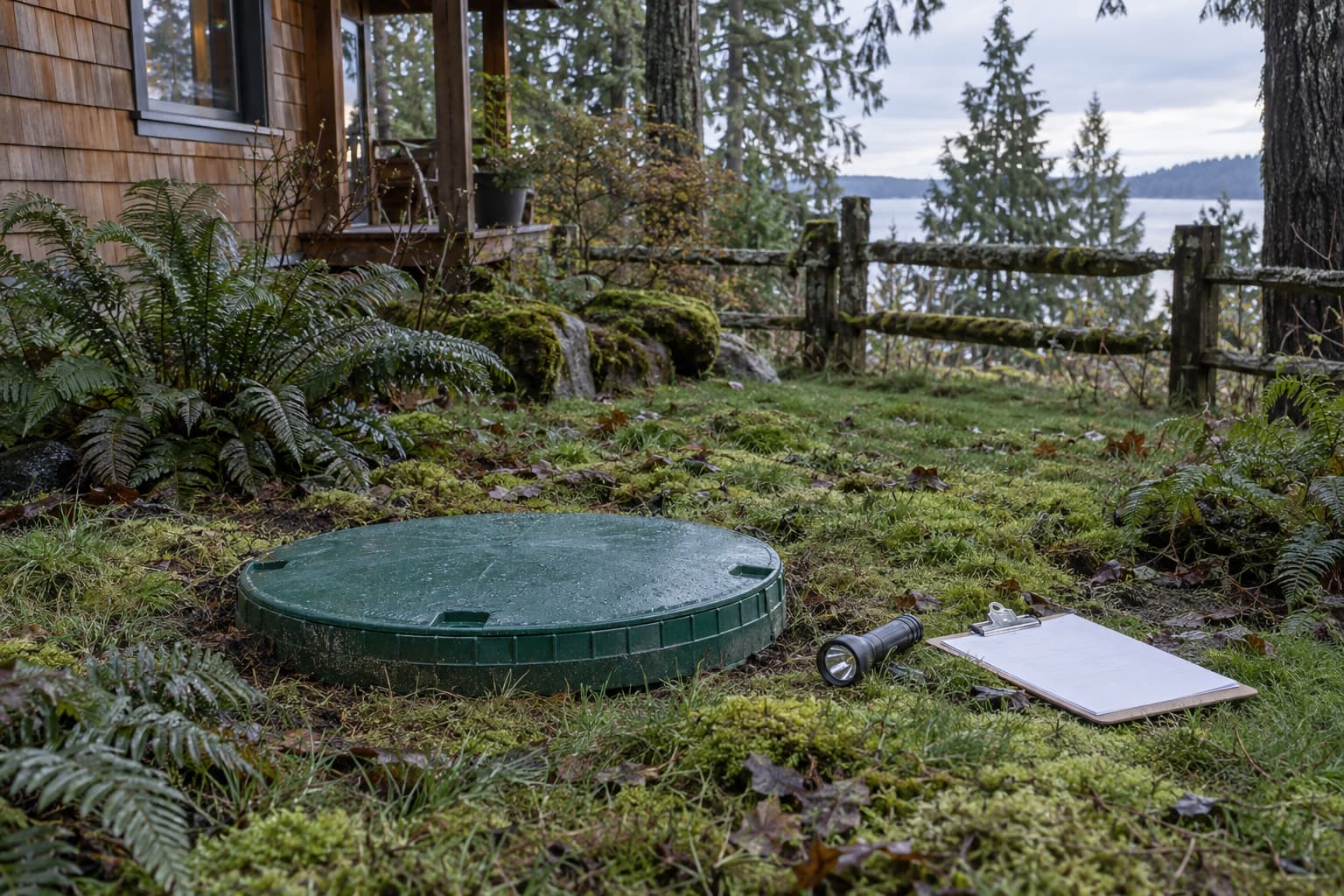
- Septic: obtain the as-built drawing, the county permit and the most recent operation and maintenance report. The approved bedroom count is the legal occupancy driver in Chelan, Grays Harbor, Pacific, Jefferson, Clallam and Lewis counties, and the state design rule assumes two people per bedroom (WAC 246-272A-0230). A five-bedroom listing on a three-bedroom system is a three-bedroom rental. Order a septic inspection with pumping; see our septic guide.
- Water: for wells, a flow test, potability test and the well log; for community systems, the water-system approval and connection status. Some counties bar rentals on parcels served by certain systems (San Juan County excludes Friday Harbor water-system parcels).
- Access and snow: confirm legal access (easement of record, road maintenance agreement) and winter reality (plowing, chains, four-wheel-drive needs). Guests who cannot reach the cabin in January cancel and review accordingly.
- Fire and life safety: egress windows in every bedroom, interconnected smoke and carbon monoxide alarms, extinguishers per floor. Several jurisdictions inspect before issuing a permit (Chelan, Cle Elum, Ocean Shores, Port Angeles, Bellingham, White Salmon, Jefferson).
- Parking: count the on-site spaces against the code minimum (one per bedroom in Grays Harbor, Pacific, San Juan and Roslyn; two minimum in Cle Elum) and against the guest count you plan to advertise.
4. Insurance and hazard exposure
- Get a written quote for an STR-specific policy during the inspection period. Standard homeowners and landlord forms exclude business use; platform host protections are not a substitute for insurance, and RCW 64.37.050 requires $1,000,000 of primary liability coverage or equivalent platform coverage.
- East of the Cascades, ask the insurer about wildfire underwriting and non-renewal history for the address. Washington's insurance commissioner reports non-renewals and cancellations roughly doubled between 2021 and 2025; insurers must give 60 days' notice of non-renewal. The state FAIR Plan is the backstop, at a price.
- On the coast and rivers, pull the FEMA flood map for the parcel. A federally backed mortgage on a home in a special flood hazard area requires flood insurance for the life of the loan; buying it at closing avoids the 30-day wait.
- Check for tsunami evacuation-zone posting requirements (Ocean Shores requires them inside the unit) and burn-ban and smoke exposure in mountain markets.
5. Revenue verification: the seller's numbers, not the seller's story
- Request 24 months of platform payout reports (Airbnb transaction history, VRBO payout summaries) and the manager's owner statements if managed. Compute realized average nightly rate (payouts ÷ nights) and occupancy (nights ÷ available nights, after owner blocks).
- Request the Department of Revenue excise tax returns for the same period. Lodging revenue that appears on payout reports but not on DOR returns is a tax problem you inherit the conversation about, and a sign the rest of the books are loose.
- Request Schedule E (or the relevant business schedule) from the seller's federal returns for two years. Lenders counting short-term rental income will ask for the same on a refinance.
- Separate one-time events. A wedding block, a film crew or a wildfire-evacuee month inflates a year.
- Rebuild the year in the cash-flow calculator at the realized rate and occupancy, with your management structure and financing, then at 20% lower revenue.
6. Bookings, furnishings and the handoff
- List every reservation with a check-in date after your target closing, with payout amounts and cancellation terms. Airbnb and VRBO do not allow listings, reviews or reservations to transfer to a new owner, so each booking needs a plan: seller honors it as a co-host arrangement, seller cancels and refunds (and eats the platform's host-cancellation fee), or buyer rebooks the guest on a new listing. Details on the buying an operating Airbnb page.
- If a manager is in place, request the management agreement and read the assignment and termination clauses. Vacasa's published terms allow cancellation on 90 days' notice; Evolve's agreement requires written consent to assign and treats bookings lost to a sale as owner cancellations unless the buyer signs up.
- Inventory the furnishings and fixtures conveying, attach a personal-property bill of sale, and itemize the personal-property value on the excise tax affidavit; it is deducted from the taxable selling price.
- Confirm what stays on the walls and in the cabinets: smart locks, thermostats, noise monitors, pricing-tool and Wi-Fi accounts, and the door codes. Ask for admin transfers at closing, not passwords in a text message.
Checklist
The documents to request on day one of the inspection period
Send this list to the listing broker the day mutual acceptance is signed. Every day you wait is a day off the contingency.
- Current STR permit, license, certificates, affidavits, inspection reports and any notices of violation
- Written confirmation from the county or city of the new-owner permit path and current cap status
- Recorded declaration, amendments, rules, two years of HOA minutes, and any resort registration records
- Septic as-built, permit and latest O&M report; well log and water tests, or water-system approval
- 24 months of platform payout reports and manager statements; DOR excise returns; two years of Schedule E
- Every future reservation with dates, payouts and cancellation terms; the management agreement if any
- Insurance declarations, claims history and loss runs; FEMA flood zone determination
- Furnishings inventory and proposed personal-property bill of sale; list of smart devices and accounts
FAQ
Questions Washington STR buyers ask first.
What should I check before buying an Airbnb property in Washington?
In order: whether the zone and county code allow a whole-home rental at that parcel and whether a permit is available or transfers to you; whether the HOA or resort covenants allow it; the septic-approved bedroom count, which sets legal occupancy in most counties; insurance and wildfire or flood exposure; 24 months of payout reports and DOR returns to verify revenue; and how existing bookings and furnishings will be handled at closing.
How do I verify a vacation rental's income before buying?
Ask for 24 months of platform payout reports and manager owner statements, the seller's Department of Revenue excise tax returns for the same period, and two years of Schedule E. Compute realized nightly rate and occupancy yourself, remove one-time events, and rebuild the year in a cash-flow model with your own financing and management costs.
Does the septic system limit how many guests I can host?
In most Washington vacation counties, yes. Chelan County limits rented bedrooms to the number approved by the health district; Grays Harbor, Pacific, Jefferson and Clallam tie occupancy to septic design capacity; the state design standard assumes two people per bedroom. Get the as-built and O&M report and count the approved bedrooms, not the ones in the listing.
Can I make my offer contingent on getting a short-term rental permit?
Yes. RexMont writes a permit contingency conditioning the buyer's obligation to close on written confirmation from the jurisdiction that a permit is available to the buyer or that the existing permit continues, plus seller cooperation with any pre-application and delivery of all permit records. In Pacific County a buyer may pre-apply during escrow with the seller's consent.
Do the Airbnb reviews and bookings come with the house?
No. Airbnb and VRBO do not transfer listings, reviews or reservations to a new owner. Each future booking needs a plan: the seller honors it with you as a co-host, the seller cancels and refunds, or the guest rebooks on your new listing. Management agreements with Vacasa or Evolve are not freely assignable either.
Sources we checked
- RCW 64.90.285 amendments to a declaration
- WAC 246-272A-0230 on-site sewage design
- RCW 64.37.050 liability insurance
- WA Insurance Commissioner wildfire guidance
- FEMA Flood Map Service Center
- Airbnb: transferring an account or reservations
- Vrbo: transferring a listing
- WA DOR REET affidavit personal property deduction (WAC 458-61A-102)
Related on rexmont.com
Under contract or about to be
Send the listing. We will run the checklist with you.
RexMont represents buyers on short-term rental purchases across Washington: the permit questions to the county, the covenant read, the septic reconciliation and the contract language that protects the value you are paying for.
- · Licensed Washington brokerage, Seattle and Bellevue offices, statewide NWMLS access
- · 1,242 five-star Google reviews, $1B+ closed
- · We coordinate with your CPA, lender and 1031 intermediary; we do not replace them